The Changing Face of Indian Consumers.
India’s consumer and retail landscape has never been as changing as it is today. Rising incomes, the middle class, digital adoption, and shifting lifestyles rewrite how consumers shop, spend, and connect with brands. From fashion and lifestyle to FMCG and luxury goods, growth here is driven by both aspiration and access.
For global and domestic brands, this momentum also brings complexity, from multi-layered regulations and tax structures to supply chain fragmentation and sustainability expectations.
At HLS Global, we help retail businesses navigate this transformation with a multidisciplinary team that supports retailers in structuring operations, managing compliance, and building scalable, transparent, and resilient retail systems across India’s diverse markets.

India is among the top four global vehicle producers, with the automotive market valued at approximately USD 125–130 billion in 2024, contributing 6–7% to GDP. Vehicle exports rose 19% in FY25 to over 5.3 million units. Cumulative FDI inflows reached USD 29.1 billion, while EV-related opportunities are estimated at USD 206 billion by 2030. Component investments are expected to accelerate with EV localisation initiatives.
India is among the top four global vehicle producers, with the automotive market valued at approximately USD 125–130 billion in 2024, contributing 6–7% to GDP. Vehicle exports rose 19% in FY25 to over 5.3 million units. Cumulative FDI inflows reached USD 29.1 billion, while EV-related opportunities are estimated at USD 206 billion by 2030. Component investments are expected to accelerate with EV localisation initiatives.

The industrial engineering sector, covering capital goods and automation systems, is valued at approximately USD 100–110 billion and contributes about 12% to manufacturing GVA. Growing at 8–10% CAGR, the sector is supported by infrastructure spending, localisation, and capex revival. Engineering goods exports have crossed USD 100 billion, reinforcing long-term growth prospects.
The industrial engineering sector, covering capital goods and automation systems, is valued at approximately USD 100–110 billion and contributes about 12% to manufacturing GVA. Growing at 8–10% CAGR, the sector is supported by infrastructure spending, localisation, and capex revival. Engineering goods exports have crossed USD 100 billion, reinforcing long-term growth prospects.

The electronics segment is experiencing strong demand across consumer categories, with spending on consumer durables increasing sharply in FY25. The industry is projected to grow at 6–8% CAGR, driven by premiumisation and expansion into Tier II and Tier III cities. Growth is supported by manufacturing incentives, including PLI schemes and 100% FDI under the automatic route for single-brand consumer electronics.
The electronics segment is experiencing strong demand across consumer categories, with spending on consumer durables increasing sharply in FY25. The industry is projected to grow at 6–8% CAGR, driven by premiumisation and expansion into Tier II and Tier III cities. Growth is supported by manufacturing incentives, including PLI schemes and 100% FDI under the automatic route for single-brand consumer electronics.
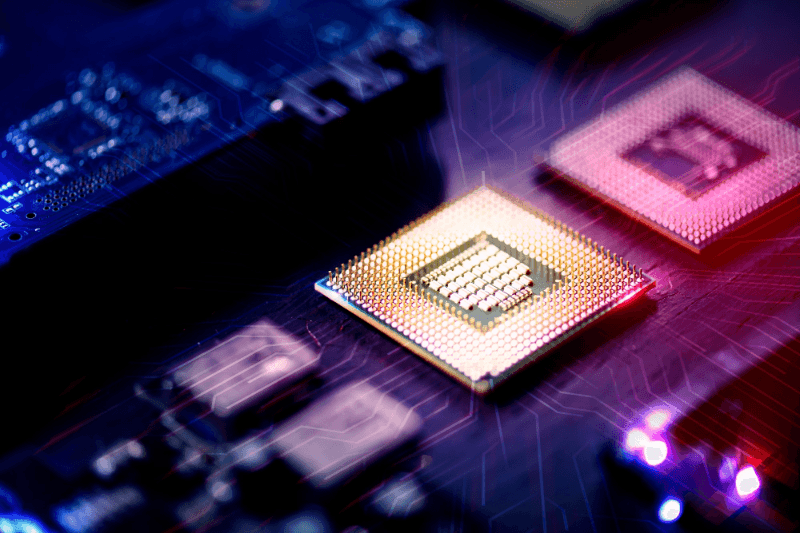
India’s semiconductor market was valued at approximately USD 52 billion in 2024 and is expected to more than double by 2030, reaching USD 100–110 billion. Demand is projected to grow at around 15% CAGR, driven by rapid digital adoption. The government has launched the India Semiconductor Mission with incentives of approximately USD 9.2 billion. As of late 2025, ten semiconductor projects have been approved across six states, supported by additional state-level incentives.
India’s semiconductor market was valued at approximately USD 52 billion in 2024 and is expected to more than double by 2030, reaching USD 100–110 billion. Demand is projected to grow at around 15% CAGR, driven by rapid digital adoption. The government has launched the India Semiconductor Mission with incentives of approximately USD 9.2 billion. As of late 2025, ten semiconductor projects have been approved across six states, supported by additional state-level incentives.

India is the sixth-largest chemical producer globally, covering over 80,000 products and employing more than 2 million people. The industry was valued at approximately USD 250 billion in 2024 and contributes about 7% to GDP. FDI inflows reached around USD 23.2 billion in FY25, excluding fertilisers. The sector is projected to grow to USD 300 billion by 2028 and further to USD 1 trillion by 2040, supported by an allocation of approximately USD 18.7 billion in Union Budget 2025–26.
India is the sixth-largest chemical producer globally, covering over 80,000 products and employing more than 2 million people. The industry was valued at approximately USD 250 billion in 2024 and contributes about 7% to GDP. FDI inflows reached around USD 23.2 billion in FY25, excluding fertilisers. The sector is projected to grow to USD 300 billion by 2028 and further to USD 1 trillion by 2040, supported by an allocation of approximately USD 18.7 billion in Union Budget 2025–26.

India’s refining capacity increased to 258.1 MMTPA in FY25 and is expected to reach 309.5 MMTPA by 2028, with long-term potential of 450–500 MMTPA by 2030. Crude oil consumption stood at approximately 5.74 million barrels per day in 2025. Natural gas consumption is projected to rise nearly 60% by 2030. The sector is expected to attract cumulative investments of USD 348–406 billion by 2035 across refining, pipelines, and midstream infrastructure, supported by CGD and PNG initiatives.
India’s refining capacity increased to 258.1 MMTPA in FY25 and is expected to reach 309.5 MMTPA by 2028, with long-term potential of 450–500 MMTPA by 2030. Crude oil consumption stood at approximately 5.74 million barrels per day in 2025. Natural gas consumption is projected to rise nearly 60% by 2030. The sector is expected to attract cumulative investments of USD 348–406 billion by 2035 across refining, pipelines, and midstream infrastructure, supported by CGD and PNG initiatives.